
Government
Oakland Mayor Barbara Lee wins re-election, 'strong mayor' measure passes
By Marcus Chen
Advertisement · Why this ad?
Marcus manages the day-to-day editorial workflow across all brands, coordinating coverage assignments and ensuring editorial standards are met. He previously served as city editor at the Pioneer Press and holds a degree in Political Science from Carleton College.
More from Marcus →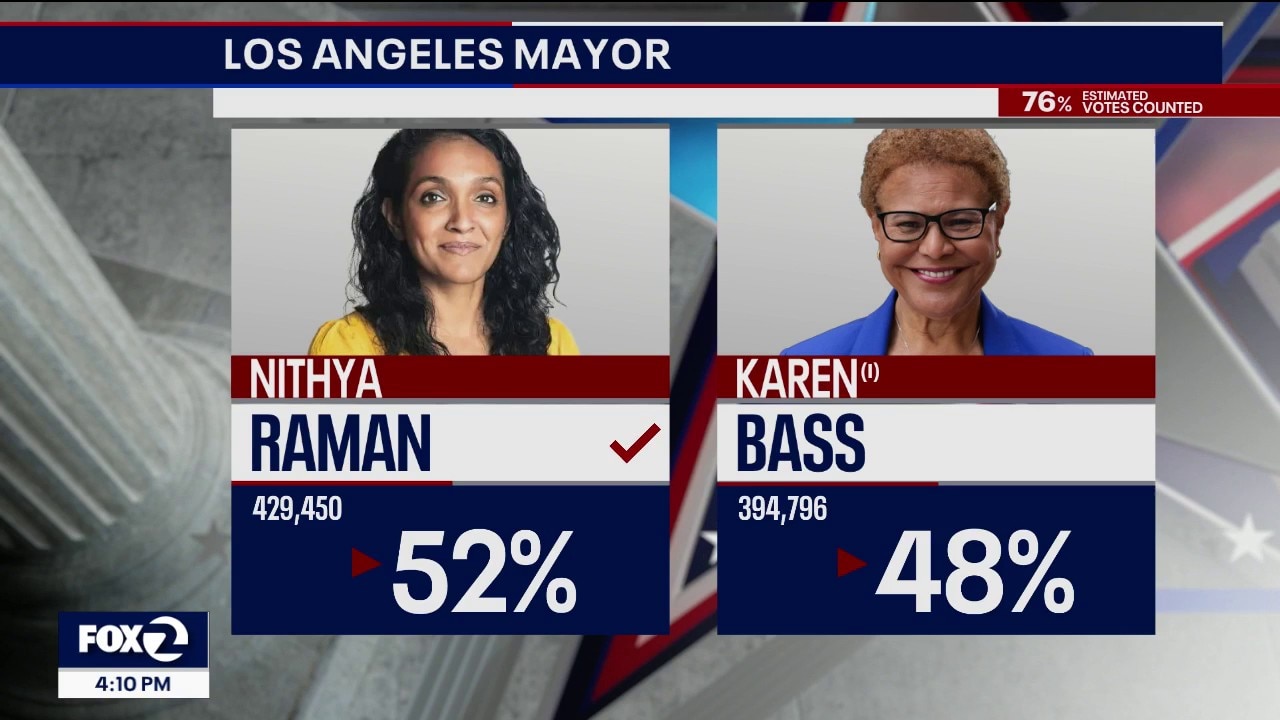
As rain drizzled over downtown Los Angeles last night, Nithya Raman stood before a crowd of supporters, her face lit with quiet determination. The city’s next mayor, she had just pulled off a stunning upset, ousting seasoned incumbent Karen Bass in a race that captivated the nation. For many residents, her victory signals a shift in how LA will tackle its most pressing issues—homelessness, public safety, and community investment—areas where her progressive vision promises change rooted in compassion and real community support.
In a hard-fought campaign that lasted months, Nithya Raman, a City Councilmember representing the 4th district, defeated Mayor Karen Bass, a seasoned politician and former Congresswoman. The race centered heavily on homelessness and public services, with Raman advocating for more innovative, community-based solutions and Bass emphasizing her experience and established policies. The final tally showed Raman winning with approximately 52% of the vote, flipping a seat that many believed was firmly in Bass’s grasp.
The campaign was marked by sharp debates and grassroots mobilization, with Raman’s supporters rallying behind her call for systemic change. Her platform emphasized affordable housing, increased mental health services, and a focus on authentic community engagement. In contrast, Bass faced criticism from some voters for her handling of homelessness and public safety issues, despite her extensive political background. The result reflects a city eager for fresh ideas and a different approach to longstanding challenges.
The victory has sent ripples through Los Angeles’ diverse neighborhoods, with community leaders praising Raman’s commitment to inclusive growth. Local organizations, such as the Los Angeles Homeless Services Authority, have expressed hope that her leadership will bring more compassionate solutions to homelessness.
Longtime resident Maria Lopez, who volunteers at a local shelter, said, “Nithya understands that these issues are about families and real people, not just numbers. We need someone who listens and acts with faith in our communities.” Many families, especially those struggling with housing, see her as a beacon of hope. Her advocacy for strong families and community-centered policies aligns with values that resonate deeply in Atherton and similar communities across the region.
While Los Angeles has a long history of political upheaval and reform, Raman’s victory is particularly notable given the city’s demographic diversity and the scale of its challenges. The city’s population exceeds 4 million residents, making it a sprawling metropolis with complex needs. Historically, Los Angeles has oscillated between progressive reforms and more conservative policies, but recent years have seen a surge in grassroots activism, especially around housing and social justice issues.
In neighborhoods like South Los Angeles, Skid Row, and the San Fernando Valley, residents have long grappled with homelessness, economic disparity, and access to quality public services. Raman’s campaign resonated deeply with these communities, many of whom have felt neglected or underserved by previous administrations. Her emphasis on community-led solutions echoes the grassroots movements that have gained momentum in recent years, such as the fight for affordable housing and police reform.
Local advocates like Carlos Hernandez, director of the LA Community Action Network, have praised Raman’s win as a sign that the city is finally listening to its most vulnerable populations. “This isn’t just about politics; it’s about human dignity,” Hernandez said. “Nithya’s victory shows that people want real change, not just promises, but tangible solutions that prioritize people over profits.”
Nithya Raman’s background is rooted in activism and community service. Growing up in Los Angeles, she experienced firsthand the struggles of working-class families and immigrant communities. Before entering politics, she was involved in various grassroots initiatives, focusing on housing justice and environmental sustainability. Her campaign was fueled by volunteers and local activists who believed in her vision for a more equitable city.
Her supporters include a diverse coalition of community organizers, young voters, and progressive leaders. Among them is activist and local teacher Jasmine Lee, who remarked, “Nithya’s approach is different because she listens. She understands that real change happens from the ground up, and that’s what we need in LA.”
Karen Bass, who has held the mayor’s office since 2022, brought a wealth of experience from her years in Congress and as a community organizer. Her tenure was marked by efforts to address homelessness and police reform, but she faced criticism for what some saw as slow progress and bureaucratic hurdles. Her loss signifies a shift in voter sentiment, reflecting a desire for more aggressive and innovative solutions.
Despite her defeat, Bass remains a prominent figure in California politics, with supporters advocating for her continued influence on regional and national issues. Her campaign and leadership helped shape the current political landscape, and her supporters argue that her experience will inform future efforts, whether in elected office or advocacy roles.
Raman’s victory marks a new chapter for Los Angeles, but the city’s challenges are vast. Her immediate priorities include launching pilot programs for affordable housing, expanding mental health resources, and improving public transportation—steps vital to addressing LA’s homelessness crisis. She has also expressed a desire to work closely with community organizations, local businesses, and city agencies to implement her vision.
Building consensus among a diverse city council will be crucial. Los Angeles’ city council is known for its ideological spectrum, and navigating this landscape will test Raman’s leadership skills. She will need to balance progressive ambitions with pragmatic governance, ensuring that her policies are feasible within the city’s budget and political climate.
In the coming months, Raman plans to hold town halls and community listening sessions across the city, fostering transparency and engagement. Her administration is expected to prioritize equitable development, environmental sustainability, and social justice initiatives, aligning with the values that propelled her to victory.
This election outcome could serve as a blueprint for other cities facing similar issues. As urban centers across the country grapple with rising homelessness, economic inequality, and climate change, Los Angeles’ experiment with progressive leadership offers a potential model for compassionate, community-driven governance.
For Atherton, a small but affluent suburb in the Bay Area, the implications are less direct but still meaningful. The broader conversation about social justice, affordable housing, and public investment resonates across California’s diverse regions. Local leaders and residents are watching closely to see how Raman’s policies unfold, hoping for innovative solutions that could inspire similar initiatives in their communities.
As she prepares to take office, the community’s hope is that Raman’s leadership will foster stronger neighborhoods and a more compassionate Los Angeles, where every family can thrive and everyone’s voice is heard. The journey ahead is long, but her victory signals that change is possible when community voices are amplified and prioritized.
By Marcus Chen
By Marcus Chen

By Marcus Chen
By Marcus Chen